


Florida Times-Union
3.058.00 Reviews
App Specs
- Version
- 8.10.3
- Updated On
- License
- Free
- Downloads
- 10,000+
- Developer
- USA TODAY Co.
- Categories
- News & Magazines
- Platform
- Android
Screenshots

 Analysis by AppCompare
I approached Florida Times-Union as a local-news reader rather than as someone looking for a general national headline app. That distinction matters. This free News & Magazines app comes from USA TODAY Co. and is built around the Florida Times-Union publication, with local reporting placed alongside broader news, photography, and video. My overall impression is that it is most useful when I want a direct connection to Jacksonville-area coverage without sorting through a large national news feed first.
The app is aimed at a broad audience, with an Everyone 10+ content rating, and it runs on Android devices using version 8.0 or later. It has passed the early experimental stage: the app was released on February 22, 2018, and the current version is 8.10.3. That history gives it the feel of an established newspaper companion, although its current average rating of 3.0 from around a hundred ratings suggests that the experience has not been equally smooth for everyone.
How the current app fits into a daily news routine
My favorite way to use this kind of app is in short sessions. I might open it with coffee, scan the local headlines, read one story that affects my area, and return later when a developing event needs attention. Florida Times-Union makes sense in that routine because its identity is much clearer than that of a general-purpose news aggregator: the local paper is the reason to install it.
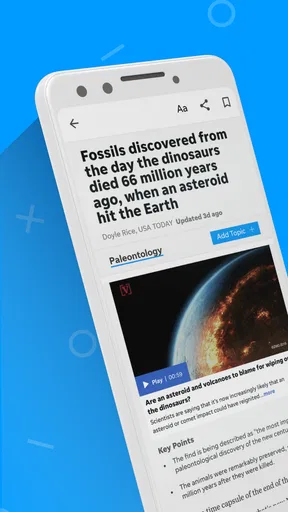
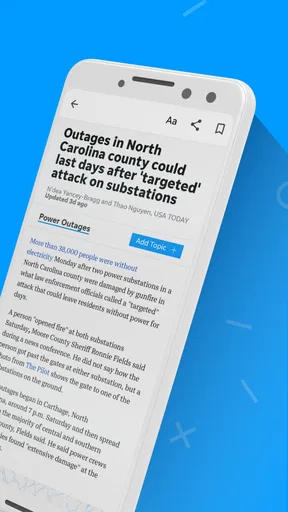
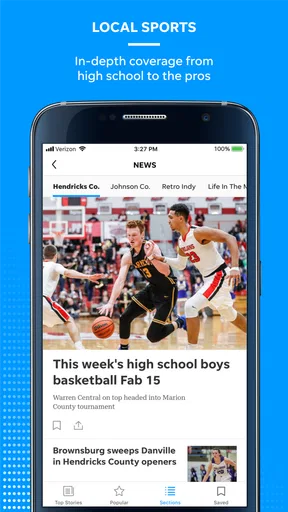
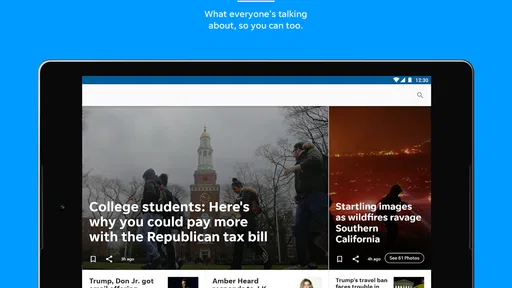
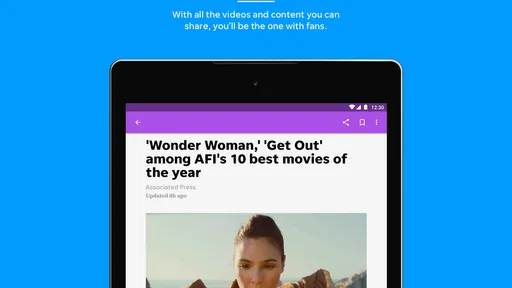
The store summary points to local and national news, strong photography, and substantial video content. In practical terms, that combination gives the app more range than a simple list of newspaper headlines. A local story can be easier to understand when photographs show the place being discussed, while video can be useful for major public events, weather situations, or community developments where images add context.
I would not treat it as a replacement for every source of information on my phone. A national news app is usually better when I want a rapid overview of international markets, politics, or several publishers at once. A social feed may surface breaking information sooner, though it also demands more checking and filtering. The Florida Times-Union app occupies a more focused middle ground: it is for readers who value a newspaper’s local perspective but still want some wider coverage in the same place.
One useful habit is to separate reading from monitoring. For relaxed reading, I can open the app and follow the stories that interest me. For an urgent local situation, I would still verify the latest details through the publication’s available updates and other reliable sources rather than assuming that the first headline tells the whole story. That is not a criticism unique to this app; local news changes quickly, and no single screen should become my only source during a developing event.
Where it works best for local readers
The strongest audience is someone who lives in the Florida Times-Union coverage area, has family there, or wants a local view while living elsewhere. A former resident checking community news, a student following local issues, or a commuter interested in regional developments can all get more value from this app than from a purely national publication.
Worth Reading Before You Choose

EA SPORTS FC Mobile 26 Is a Bigger Football Game, but It Takes Time

Flipboard Shows What News Apps Must Do Beyond the Feed

Switching to Android Auto Means Rethinking Your Driving Routine

Google Calendar Makes a Crowded Week Easier to Manage

Ludo King Makes the Most of the Minutes Between Plans

Baby Panda World Brings Quick Play to Modern Phones, but Its Game Library Feels Busy
It is also a sensible choice for readers who prefer a publication-centered experience. Instead of building a reading list from many unrelated sources, I can start with one editorial home and decide which stories deserve my time. That can reduce the mental effort of comparing headlines across several apps, especially when I only have a few minutes.
Photography is more than decoration here. For local reporting, an image can help me recognize a street, building, event, or neighborhood mentioned in a story. That visual connection is one reason I would choose this over a text-only headline feed. The trade-off is that people who mainly want compact, low-bandwidth reading may find a media-rich newspaper app less appealing than a lightweight text reader.
A realistic everyday scenario
Imagine that I am getting ready for work and hear that something has happened nearby. I open the app, look for the local report, and use the article’s surrounding context to understand whether it is a one-off incident or part of a larger community story. Later, I return to see whether the coverage has developed, then watch a related video if the visual explanation is more useful than another paragraph.
That workflow shows the app’s practical value: it can move me from a quick local check to deeper reading without making me start from a generic national homepage. It also shows its limitation. If I need a minute-by-minute alert system, a specialist service may be better. If I want a broad collection of opinions, a newspaper app alone will feel narrow. Florida Times-Union is strongest when the local publication itself is the priority.
What the version history means for existing users
The current version, 8.10.3, is important mainly as a sign that the app continues to be maintained rather than abandoned after its original launch. The product has been available since February 22, 2018, so existing readers are not dealing with a brand-new experiment. At the same time, a version number by itself does not tell me that every part of the experience has been transformed. I would judge the update by everyday reliability, reading comfort, and how naturally the app handles multimedia.
For someone who already uses the app, the sensible approach is to update and then check the basics that matter most: whether local stories open consistently, whether photographs and video behave properly on the device, and whether the reading flow still feels comfortable. Those checks are more valuable than assuming that a newer version automatically solves every previous annoyance.
New users should also give themselves a short trial period rather than deciding after one opening. News apps can feel different depending on the time of day and the news cycle. A quiet afternoon may make the app appear sparse, while a busy local news day may show its value immediately. I would read several local stories, try the visual content, and see whether the publication’s editorial focus matches my interests before making it part of my daily routine.
The app is free to install, which makes that trial relatively straightforward. However, in-app purchases are listed from $14.99 to $69.99 per item. That means I would pay attention to any subscription or purchase screen before confirming anything, especially if I am installing it for occasional reading rather than regular newspaper use. The free entry point is convenient, but it should not be confused with unlimited access to every possible part of a newspaper service.
That pricing structure also changes who should install it. A committed local-news reader may find a paid option reasonable if it supports a publication they rely on. Someone who only wants occasional headlines may prefer free general news sources and avoid a recurring commitment. I would make that decision based on reading frequency: the more often local reporting influences my day, the easier it is to justify exploring the paid side; the less often I open the app, the more carefully I would compare the value.
Small workflow choices that improve the experience
One thing I would do is read the headline list with a purpose instead of opening every story. Local apps can become time-consuming when several articles cover related developments. I would select the clearest report first, then use follow-up coverage only when it adds a new angle, image, or video. This keeps the app useful as a daily briefing rather than turning it into an endless scroll.
A second tip is to treat photography and video as tools for deciding what to read, not merely as extras. If a visual report immediately clarifies the location or scale of an event, it may save me from reading several short updates. Conversely, when I am on a limited connection or in a hurry, I would prioritize text and return to media later. The app’s richer presentation is a strength, but it works best when I choose the format that suits the moment.
A third practical insight is to use the app as a local anchor while keeping a separate source for wider verification. If a local story has personal consequences, I would compare the latest details with official information or another established news source. That does not weaken the app’s role; it gives the local reporting a sensible place within a broader information routine.
Readers should also remember that the app’s publication focus is an advantage only if that focus matches their needs. Someone in another state who wants comprehensive coverage of their own city will probably be better served by a nearby newspaper app. Someone who wants one national dashboard may prefer an aggregator. The Florida Times-Union application is not trying to be all of those things at once, and I think it is better judged for its local identity than for what it does not attempt to become.
Where the experience still has room to improve
The average rating of 3.0, based on around a hundred ratings and dozens of written reviews, is a useful warning for prospective users. It does not prove that the app will be troublesome on every device, but it does tell me to keep expectations realistic. A newspaper app can be valuable editorially while still frustrating readers through awkward navigation, inconsistent loading, or unclear boundaries between free reading and paid access.
That uncertainty is especially relevant to people who want a polished, highly personalized news dashboard. If my priority is extensive controls, instant customization, or a very refined reading interface, I would compare this app with larger national services before settling in. The Florida Times-Union’s main reason to exist is its publication content, not the promise of being the most flexible news platform available.
There is also a tension between rich media and simplicity. Large photographs and video can make local reporting feel immediate, but they may make the app less attractive to readers who want a fast text-only briefing. I would recommend it to people who enjoy seeing and watching the news, while warning minimalist readers that a browser-based text experience or a compact news reader may fit better.
Another limitation is commitment. The app is easy to try because it is free to download, yet the listed in-app purchase range means users need to understand what they are agreeing to before paying. I would not subscribe impulsively after reading one interesting article. I would first decide whether I need regular access, whether the local coverage is central to my routine, and whether the purchase terms suit that pattern.
Who should choose it, and who should skip it
I would recommend Florida Times-Union to a Jacksonville-area reader who wants local reporting, photographs, and video in a dedicated publication app. It is also worth considering for people with family, work, or community ties in the region who want a consistent local perspective from a recognized newspaper brand.
I would be more cautious about recommending it to someone who rarely reads local news, wants only free headlines, or expects a single app to cover every region and topic equally deeply. That reader may get more from a broad aggregator. I would also point heavy breaking-news users toward a service designed specifically for rapid alerts if immediate notifications are their main requirement.
For older devices, the minimum operating-system requirement of Android 8.0 or later is straightforward, but I would still consider the phone’s available storage, connection quality, and ability to handle media comfortably. The app’s age rating of Everyone 10+ makes it broadly suitable for families, although adults should still use normal judgment when news stories involve upsetting events.
What I would watch in future updates
When a future version arrives, I would look first for improvements that readers can feel without studying a changelog: smoother movement between local stories, dependable handling of photographs and video, clearer purchase messaging, and a reading layout that remains comfortable during longer sessions. Those are the areas most likely to affect whether the app becomes a daily habit.
I would also watch how well the app balances local depth with national context. The local focus should remain its defining reason to use it, but broader stories are more helpful when they explain why a national decision matters to Florida readers. That balance is difficult: too much national material makes the app feel interchangeable, while too little context can leave local coverage isolated.
My final view is positive but measured. This is a publication app first, not a universal news toolbox. Its value comes from giving local readers a focused route into Florida Times-Union journalism, supported by visual and video content and backed by an established release history. The middling rating and paid options mean I would test it carefully rather than recommend it blindly, but the free download makes that evaluation easy.
If local news is part of your everyday life, I think it deserves a trial. I would use it as my local starting point, keep another trusted source for wider or urgent verification, and decide on any in-app purchase only after seeing how often I return. For that specific reader, Florida Times-Union can be a useful, grounded alternative to the noise of a general news feed.
Pros
- Local Jacksonville news and community coverage in one place.
- Covers breaking news
- sports
- politics
- and regional events.
- Easy-to-scan layout helps users find recent stories quickly.
- Useful for staying informed about Northeast Florida developments.
- Digital access is convenient for readers away from print editions.
Cons
- Some articles or features may require a subscription.
- Advertising can make parts of the app feel cluttered.
- Coverage is primarily regional and may feel limited to nonlocals.
- App performance and loading times may vary by device or connection.
- Not every print edition feature may be available in the mobile app.
FAQs for Florida Times-Union
What is the Florida Times-Union app?
The Florida Times-Union app is a mobile news platform for following news and information related to Jacksonville, Northeast Florida, and surrounding communities. After exploring the app, its main focus is delivering local reporting, breaking updates, politics, sports, business, entertainment, and opinion content in a format designed for reading on a phone or tablet. It is useful for readers who want regional coverage in one place.
Is the Florida Times-Union app free to download and use?
Downloading the Florida Times-Union app is generally free, allowing users to install it and explore available content without paying an upfront download fee. However, access to all articles and premium features may depend on the publication’s subscription policy. Some stories can be limited for non-subscribers, while subscribers may receive broader access. Check the current in-app terms and pricing before subscribing.
What type of news can I read in the Florida Times-Union app?
The app focuses primarily on local and regional journalism, including Jacksonville news, community updates, crime and public safety, local government, education, sports, business, weather, and cultural coverage. Depending on the current edition and editorial updates, users may also find national or statewide stories. The strongest reason to use it is its emphasis on Northeast Florida rather than general news alone.
Does the app require a subscription to read every article?
A subscription may be required to read all available articles, especially when content is protected by a digital paywall. The exact number of free articles, subscriber benefits, and available plans can change over time. In my experience reviewing news apps of this type, it is best to create an account and review the subscription screen carefully so you understand billing, renewal, and cancellation conditions before committing.
Does the Florida Times-Union app offer breaking-news alerts and offline reading?
The app may provide notifications for breaking news, important local developments, sports results, and other editorial updates, depending on the permissions enabled on your device and the features supported by the current version. Notification frequency can usually be controlled in the app or system settings. Offline reading availability may vary, so users should not assume every article can be saved without an internet connection.


